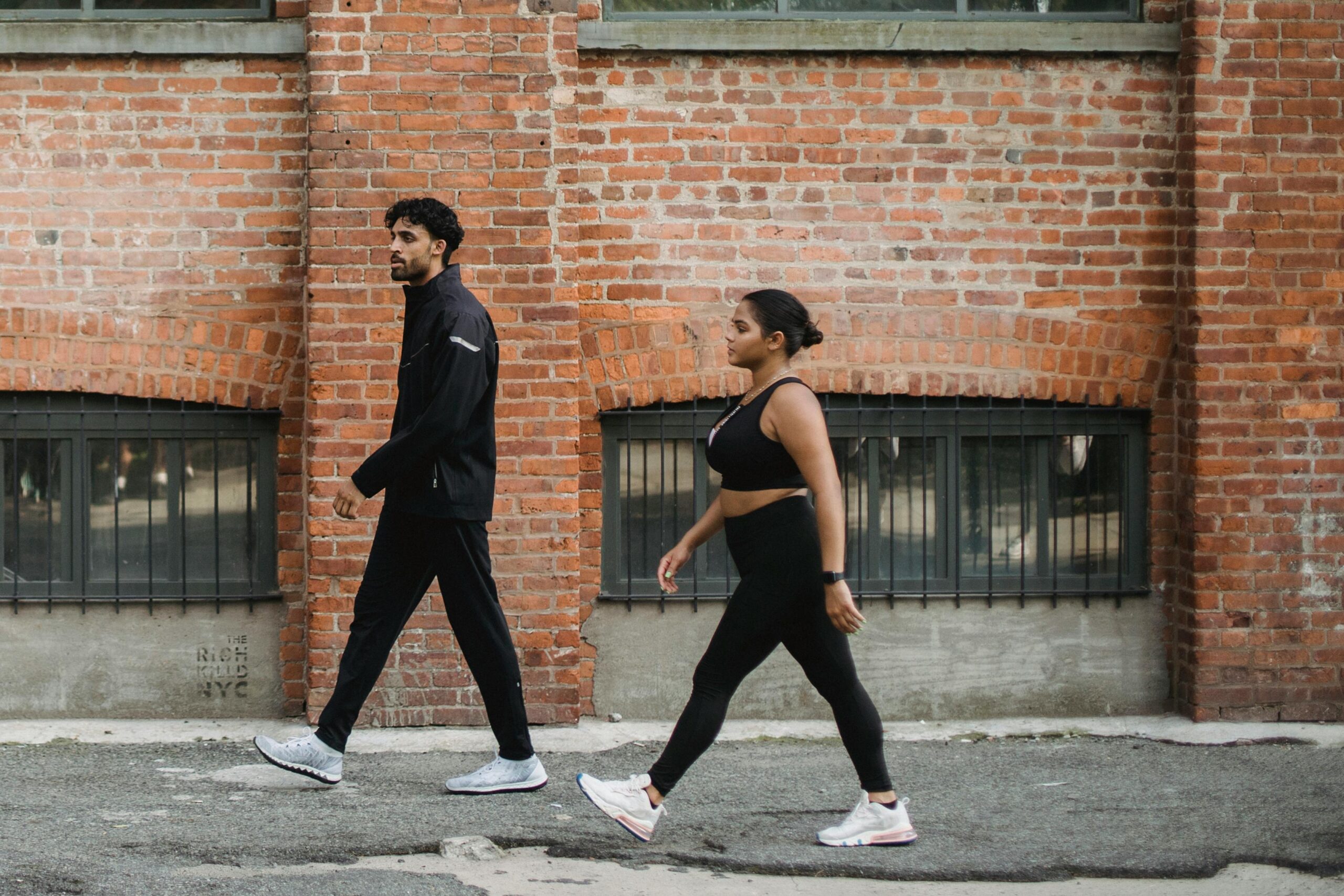
If you want to lose weight by walking, the pace you choose matters more than most beginners realize.
I’ve seen many people start walking with great motivation, but they either move too slowly to see results or push too hard and burn out within two weeks. Both approaches lead to frustration. The key isn’t walking as fast as possible. It’s walking at a speed that challenges you just enough to create consistent calorie burn without making you dread the next session.
When I coach beginners, I usually recommend starting at a brisk but controlled pace. For most people, that falls somewhere around 3 to 4 miles per hour. At that speed, a 30-minute walk can burn roughly 150 to 250 calories, depending on your body weight. Done three to five times per week, that adds up to meaningful fat loss over time.
The best walking pace for weight loss is not the fastest pace you can manage. It’s the fastest pace you can repeat consistently week after week.
In this guide, I’ll walk you through how to find your ideal speed, how long to maintain it, how to measure intensity properly, and how to avoid the mistakes that quietly slow progress.
What is the Best Walking Pace Beginners Should Aim For?
The right walking pace for weight loss isn’t about chasing a number. It’s about finding your sustainable challenge point.
When beginners ask me, “How fast should I walk?” my answer is usually this: walk fast enough that you feel slightly breathless, but not so fast that you need to stop after ten minutes.
Most beginners do well starting between 3 and 4 miles per hour. That pace raises your heart rate into the moderate-intensity range, where calorie burn becomes meaningful without overwhelming your joints or nervous system.
The mistake I see most often is this: people jump straight into power-walking speeds of 4.5 to 5 mph because they think faster is better. For many beginners, especially those carrying extra weight, that pace can quickly lead to excessive soreness, joint discomfort, or early burnout. That kind of overexertion often results in fatigue that makes it harder to stay consistent the following week.
Instead, I recommend using what I call the “repeat tomorrow” rule. If your pace leaves you exhausted for the rest of the day, it’s too aggressive. If you finish your walk feeling energized and capable of doing it again tomorrow, you’re in the right range.
For example, if you weigh around 80 kg and walk briskly for 30 minutes at 3.5 mph, you can burn roughly 180 to 220 calories. Do that four times per week, and you’re already creating a meaningful calorie deficit without extreme dieting.
The best walking pace for weight loss is the one that creates steady calorie burn while protecting your consistency. Progress comes from repetition, not exhaustion.
How Fast Should You Walk to Burn More Fat Effectively?
If your goal is fat loss, speed matters, but not in the way most people think.
Many beginners believe they need to walk as fast as possible to burn more fat. I actually focus less on speed and more on total calorie burn over the week. Fat loss ultimately comes down to creating a small, sustainable calorie deficit for beginners, not exhausting yourself in a single workout.
Here’s what that means in practical terms.
Walking faster does increase the number of calories burned per minute. A 30-minute walk at 4 mph will burn more calories than the same walk at 3 mph. But if walking at 4.5 to 5 mph leaves you sore, overly fatigued, or skipping sessions later in the week, you end up burning fewer calories overall.
When I guide beginners, I aim for moderate intensity first. That usually means:
- A pace where conversation is slightly challenging
- A heart rate of around 50 to 70 percent of your maximum
- An effort level of about 6 out of 10
At this intensity, your body uses a mix of fat and carbohydrates for fuel. While you may hear a lot about the “fat-burning zone,” what truly matters is total energy burned and your ability to maintain that effort consistently.
For example, imagine you weigh 85 kg. Walking briskly for 30 minutes at around 3.5 to 4 mph might burn approximately 200 to 250 calories. If you do that five times per week, you’re creating roughly 1,000 to 1,250 calories of additional weekly burn. Over time, combined with balanced nutrition, that steady output supports real fat loss without extreme restriction.
The key isn’t chasing the highest speed. It’s choosing a pace that helps you accumulate enough weekly movement to support a calorie deficit while still feeling strong enough to repeat it.
Burn more across the week, not just in one session.
How to Measure If Your Walking Pace Is Actually Effective
The best walking pace is useless if you don’t know whether you’re working hard enough.
I don’t tell beginners to obsess over exact miles per hour. I teach them how to measure effort. Because your body doesn’t respond to speed alone. It responds to intensity.
There are three simple ways I recommend tracking your walking intensity.
First, use the talk test. If you can speak in short sentences but not comfortably hold a long conversation, you’re likely in the moderate-intensity zone. Or if you can sing easily, you’re walking too slowly. And if you can barely speak, you’re probably pushing too hard.
Second, monitor your heart rate. It is important to know one’s normal heart rate. A good starting target is 50 to 70 percent of your estimated maximum heart rate. You can estimate your maximum by subtracting your age from 220. For example, if you’re 40 years old, your estimated maximum is about 180 beats per minute. That means your moderate range falls roughly between 90 and 126 beats per minute.
Third, use a perceived effort scale from 1 to 10. I usually tell beginners to aim for a 6 out of 10. You feel warm. You’re breathing heavier. But you’re still in control.
When I coach walking for weight loss, I don’t want exhaustion. I want controlled strain. That’s the zone where you can accumulate enough weekly movement to support fat loss without constant soreness or burnout.
The goal is not to feel destroyed after every session. The goal is to finish knowing you could repeat it tomorrow.
How Long Should You Walk to See Weight Loss Results?
If you’re just starting out, duration matters just as much as pace.
I don’t recommend jumping into 60-minute walks right away. For most beginners, that’s unnecessary and often discouraging. What works better is building consistency first, then expanding duration gradually.
Here’s the structure I usually suggest.
Start with 20 to 30 minutes per session, three to five times per week. That may not sound dramatic, but at a brisk pace, it’s enough to create meaningful calorie burn. More importantly, it’s manageable. And manageable routines are the ones that stick.
Let’s put it into perspective.
If you walk 30 minutes at a moderate pace and burn roughly 200 calories per session, doing that four times per week gives you about 800 calories of additional weekly energy expenditure. Over a month, that’s more than 3,000 calories. Combined with sensible nutrition, that supports steady fat loss without extreme dieting or punishing workouts.
Once that baseline feels comfortable, then we increase the challenge.
There are three smart ways to progress:
1. Increase time first. Add five minutes to your walks each week until you comfortably reach 40 to 45 minutes.
2. Add intervals. Introduce short bursts of faster walking for one to two minutes, followed by a slower recovery pace.
3. Add terrain. Walking on gentle hills or inclines increases intensity without requiring extreme speed.
What I don’t recommend is doubling your duration overnight. That often leads to soreness, fatigue, and skipped sessions. Progress should feel intentional, not overwhelming.
The real goal is accumulating enough weekly movement to support fat loss while protecting your joints and energy levels. When you can consistently maintain 150 to 200 minutes of brisk walking per week, you’ve built a strong foundation for long-term results.
Consistency first. Progress second.
Should Your Walking Pace Change as You Get Fitter?
Yes. But not in the dramatic way most people think.
One thing I always tell beginners is this: your body adapts faster than your motivation. What feels challenging in week one will feel normal by week four. That’s a good sign. It means you’re getting stronger. But it also means your calorie burn may slowly decrease if nothing changes.
Here’s the important part, though. You don’t need to suddenly jump from 3.5 mph to 5 mph.
Progression should be small and strategic.
When your usual brisk pace starts to feel easy, meaning your breathing is controlled and your heart rate barely rises into moderate intensity, it’s time to make a minor adjustment.
You can:
- Increase your speed slightly by 0.2 to 0.3 mph
- Extend your walk by five minutes
- Add short incline segments
- Introduce structured intervals
I prefer gradual upgrades over aggressive ones. Why? Because fat loss depends on sustainability. If progression causes knee discomfort or excessive soreness, you risk interrupting your weekly consistency.
Let’s use a simple example.
If you started walking 30 minutes at 3.5 mph and now it feels effortless, increasing to 3.8 or 4 mph may add an extra 20 to 40 calories per session. Over five sessions per week, that’s another 100 to 200 calories. Small changes compound over time.
Plateaus occur when your body becomes efficient at a given workload. The solution is not extreme intensity. It’s controlled overload.
What I focus on with beginners is this question: Does your walk still slightly challenge your breathing?
If the answer is no, make a small adjustment. If the answer is yes, stay the course.
Progression should feel intentional, not punishing. That’s how you continue burning fat without burning out.
Should You Combine Different Walking Speeds for Better Fat Loss?
Yes, and this is where walking becomes much more powerful.
Once you’ve built a consistent base pace, mixing speeds can increase calorie burn without forcing you into uncomfortable sprinting. I use intervals with beginners not to make the workout extreme, but to keep the body adapting.
Here’s why it works.
When you alternate between moderate and brisk segments, your heart rate rises and falls repeatedly. That variation increases total energy expenditure and challenges your cardiovascular system in a safe, controlled way. It also makes your walk feel less monotonous.
But notice what I did not say. I did not say you need all-out efforts.
For beginners, I recommend a simple structure like this:
- Start with 5 minutes at an easy warm-up pace.
- Walk 3 minutes at your regular brisk pace.
- Increase speed slightly for 1 to 2 minutes.
- Return to your brisk base pace for 3 minutes.
- Repeat this cycle 3 to 4 times.
- Finish with 5 minutes at a slower cooldown pace.
This keeps most of the session manageable while adding short periods of higher intensity.
If you’re carrying extra weight or new to structured exercise, even a small increase in speed can feel significant. That’s normal. The goal is not exhaustion. The goal is stimulation.
Over time, these small speed variations can add an extra 30 to 80 calories per session, depending on your weight and effort. Across a week, that adds up without increasing total workout time.
I often tell beginners this: walking does not need to stay flat and predictable forever. Once your body adapts, variation becomes your advantage.
Use speed changes as a tool, not a punishment.
Common Walking Mistakes That Quietly Slow Your Fat Loss
Most beginners don’t fail because walking doesn’t work.
They struggle because small, repeated habits quietly cancel out their effort. I’ve seen this happen over and over again. The good news is that these mistakes are easy to correct once you recognize them.
1. Walking Too Slowly Because It Feels Comfortable
Comfort isn’t the goal. Mild challenge is.
If you can scroll on your phone, breathe normally, and feel no change in effort during your entire walk, you’re probably moving too slowly to create meaningful calorie burn. You don’t need to be gasping for air, but you should feel warm, slightly breathless, and aware that you’re working.
A simple check is the talk test. If you can hold a long, relaxed conversation without any effort, try nudging your speed up just a little.
2. Walking Too Fast Too Soon
On the other side, some beginners start aggressively. They push to 4.5 or even 5 mph in the first week because they want faster results. Two weeks later, their knees ache, their energy drops, and they begin skipping sessions.
Fat loss depends on repetition. When your pace leaves you drained for the rest of the day, it becomes harder to show up again tomorrow.
If you finish your walk feeling accomplished but still functional, you’re in the right range. If you feel wiped out, dial it back slightly. Sustainable intensity always beats short bursts of overexertion.
3. Keeping the Same Pace for Months
Your body adapts quickly. What felt challenging in week one won’t feel the same in week six.
If your breathing never changes and your heart rate barely rises anymore, your calorie burn may be lower than you assume. That doesn’t mean walking stopped working. It simply means your body has become more efficient.
Small adjustments are usually enough. A slight increase in speed, a few hills, or short intervals can reintroduce the stimulus your body needs without overcomplicating your routine.
4. Ignoring Overall Daily Movement
Here’s something many walking guides overlook.
If you walk for 30 minutes but remain seated for most of the remaining day, your overall daily energy expenditure stays relatively low. Walking is powerful, but total daily movement matters too.
Simple habits like standing breaks, short stretch intervals, taking stairs, or light evening movement can increase your daily calorie burn without formal workouts.
Fat loss improves when movement becomes part of your lifestyle, not just a scheduled session.
5. Expecting Visible Results Too Quickly
Walking creates steady fat loss, not dramatic week-one transformations.
Many beginners quit because the scale doesn’t drop immediately. But walking works gradually. Improved endurance often appears first. Then energy improves. Visible changes typically follow after several consistent weeks.
Instead of focusing only on weight, track completed sessions. Consistency is a stronger predictor of results than daily scale fluctuations.
6. Neglecting Strength Training
Walking burns calories, but strength training helps preserve muscle while you lose fat.
Without resistance work, some of the weight lost may come from muscle rather than fat. That can slow metabolism over time.
Even two short bodyweight sessions per week can make a noticeable difference in long-term body composition and strength.
7. Not Hydrating Properly
Hydration is often underestimated.
Even mild dehydration can make your walk feel harder than it should. Your heart rate rises faster, your perceived effort increases, and fatigue sets in sooner, even if your pace hasn’t changed.
I’ve seen people assume they’re out of shape when, in reality, they simply haven’t been drinking enough water. Many beginners also make common hydration mistakes, like waiting until they feel thirsty, drinking too little throughout the day, or relying only on coffee and sugary drinks.
Walking may seem simple, but your body still depends on proper fluid balance to perform efficiently. Staying consistently hydrated throughout the day supports better endurance, more stable energy, and safer progression.
Fat loss from walking is not complicated. But it does require awareness.
The people who see results are rarely the ones walking the fastest. They’re the ones who walk consistently, make small adjustments when needed, and avoid these quiet, easily correctable mistakes.
Conclusion: The Best Walking Pace Is the One You Can Sustain
If there’s one thing I want you to remember, it’s this: fat loss from walking is built on consistency, not speed.
You don’t need to power walk at extreme speeds. You don’t need to hit perfect numbers every session. What you need is a brisk, repeatable pace that raises your heart rate, challenges your breathing slightly, and allows you to accumulate enough weekly movement to support fat loss.
- Start with 20 to 30 minutes at a moderate to brisk pace.
- Aim for a mild but noticeable challenge.
- Progress gradually as your body adapts.
- Support your effort with proper hydration and balanced nutrition.
Walking works because it is sustainable. It protects your joints, improves cardiovascular health, and helps create the steady calorie deficit required for fat loss without overwhelming your body.
If you focus on weekly consistency instead of daily intensity, results follow.
The best walking pace for weight loss is not the fastest possible. It is the smartest pace you can maintain long term.
Frequently Asked Questions (FAQs)
Commonly asked questions about the best walking pace for weight loss.