I used to stretch regularly and still wonder why my body felt stiff again a few hours later. I would do flexibility stretches after workouts, add a few full body stretches on rest days, and yet everyday movements still felt tight. Bending down, reaching overhead, and even sitting for long periods never seemed to get easier.
That’s when I realised that stretching alone wasn’t the issue. I was focusing on flexibility, but not really improving how my joints moved or how that flexibility carried over into daily life. Feeling looser during a stretch didn’t always mean I moved better afterward.
Learning how to improve range of motion helped everything click. Once I started paying attention to how my joints moved, adding dynamic movements, and building simple daily habits, flexibility stopped feeling temporary. Movement felt smoother, more controlled, and easier to maintain throughout the day.
In this article, I’ll break down what range of motion and flexibility actually mean, which stretching techniques support lasting mobility, and how to build habits that help your body move more freely during workouts and everyday life.
What Is Range of Motion and Flexibility?
Range of motion and flexibility often get used as if they mean the same thing, but they play different roles in how your body moves.
Range of motion refers to how far a joint can move in a specific direction. Think about how high you can lift your arm, how far you can rotate your hips, or how deeply you can squat. If a joint lacks range of motion, movement feels restricted, no matter how strong or flexible you are.
There are two common types of range of motion:
- Active range of motion is how far you can move a joint using your own strength and control.
- Passive range of motion is how far a joint can move with assistance, such as using a strap or external support.
Flexibility, on the other hand, describes how easily your muscles and connective tissues allow that movement to happen. Flexible muscles stretch more comfortably, while tight muscles resist movement and create stiffness.
This is where many people get stuck. You can stretch regularly and feel flexible during a stretch, yet still lack control or usable movement in daily life. Flexibility without joint control does not always translate to better movement.
Improving range of motion means working on both sides of the equation. Flexible muscles help movement feel easier, but healthy joints and controlled motion are what make that flexibility useful. When both improve together, movement starts to feel smoother, stronger, and more natural instead of forced.
What Are the Most Effective Flexibility Stretches to Improve Range of Motion?
When I first focused on flexibility, I treated all stretches the same. I held positions longer, tried to go deeper, and assumed that more stretching would automatically lead to better movement. What I learned over time is that different stretching methods serve different purposes, especially when the goal is to improve range of motion, not just feel loose.
Static stretching helps lengthen muscles and reduce tension, but it works best after movement, not before it. Holding a stretch allows tight muscles to relax, which can support long-term flexibility. This makes static stretches useful at the end of a workout or later in the day, when your body is already warm.
For example, holding a hamstring stretch after a run can help ease tightness, but relying solely on static stretching rarely improves joint mobility during activity.
PNF stretching takes flexibility a step further by combining muscle contraction and relaxation. This method helps the nervous system allow deeper movement, which is why it often feels more effective than holding a stretch passively. While it works well, it requires focus and control, so it’s best used intentionally rather than frequently.
What made the biggest difference for me was understanding that flexibility improves range of motion only when it supports movement. Stretching should make motion easier, not just increase how far you can pull a muscle. When stretches feel disconnected from how you move during the day, the results tend to fade quickly.
The most effective flexibility work supports joint movement, muscle control, and consistency. When stretching connects to how you move, flexibility becomes something you can use, not just something you feel during a stretch.
How Full Body Stretches Support Overall Flexibility
When I focused only on tight areas, progress felt uneven. I would stretch my hips one day and my shoulders the next, but my body still felt restricted during movement. What helped was shifting toward full-body stretches that addressed how everything worked together.
Full-body stretches support flexibility by improving the coordination of muscles and joints throughout the body. Movement rarely happens in isolation. Tight hips can affect your lower back. Limited shoulder mobility can influence neck tension. When one area remains restricted, other parts often compensate, leading to stiffness elsewhere.
This is where the role of stretching in injury prevention and performance becomes clearer. Full body stretches reduce uneven loading by keeping movement balanced across joints and muscle groups. When the body moves more evenly, strain decreases, and performance feels smoother, whether during workouts or daily activities.
Rather than chasing deeper stretches in one area, full-body stretching encourages better movement patterns. It helps joints move through comfortable ranges while muscles learn to support that motion. Over time, this makes flexibility feel more usable instead of temporary.
Consistently practicing full-body stretches also improves posture and body awareness. When movement feels coordinated, everyday tasks like bending, reaching, or walking feel easier and less forced. That sense of ease often matters more than how far you can stretch in a single position.
Full body stretches work best when used regularly and paired with movement. They do not replace targeted stretching, but they provide the foundation that allows flexibility to carry over into real-world motion.
Why Dynamic Stretching Improves Range of Motion
I used to treat stretching as something you do only after a workout. Once I added dynamic stretching before movement, I noticed that my body felt more prepared, less stiff, and easier to control right from the start.
Dynamic stretching improves range of motion because it involves moving your joints through controlled, active ranges rather than holding static positions. These movements gently warm the muscles, lubricate the joints, and signal to your nervous system that it is time to move. This prepares your body for activity in a way static stretching does not.
Unlike passive stretches, dynamic movements mirror real-life motion. Arm circles, leg swings, hip rotations, and walking lunges all take joints through the ranges you actually use during workouts and daily activities. This helps turn flexibility into usable movement instead of something that only shows up during a stretch.
Dynamic stretching also helps bridge the gap between mobility and strength. When you move actively through a range of motion, your muscles learn to support that movement. This improves control, coordination, and confidence, especially at the edges of your range where stiffness or hesitation often appears.
Adding dynamic stretches before workouts or even as short movement breaks during the day can make a noticeable difference. When joints move regularly through comfortable ranges, stiffness builds up less easily, and movement feels more natural rather than forced.
Dynamic stretching does not replace static stretching. Instead, it complements it by helping your body use the range of motion you are working to improve. When both approaches work together, flexibility becomes functional and easier to maintain over time.
Daily Stretches to Improve Flexibility and Range of Motion
What made the biggest difference for me was not adding longer stretching sessions, but making stretching more consistent. Short, daily stretches helped my body stay loose between workouts and reduced the stiffness that used to build up from sitting or repetitive movement.
Daily stretching works best when it focuses on gentle, controlled motion rather than forcing depth. Even five to ten minutes can help maintain flexibility and support the range of motion when done regularly.
For the neck and shoulders, slow movements help release tension that builds up during the day. Gentle neck tilts and controlled shoulder rolls keep these areas mobile without strain, especially if you spend long hours at a desk.
For the upper body and chest, opening movements counteract rounded posture. Simple doorway stretches, interlacing your fingers behind your back, and lifting your arms slightly can improve shoulder mobility and reduce upper back stiffness.
To support the spine and core, flowing movements work better than long holds. Exercises like cat-cow encourage spinal movement in multiple directions and help the back feel more mobile without forcing flexibility.
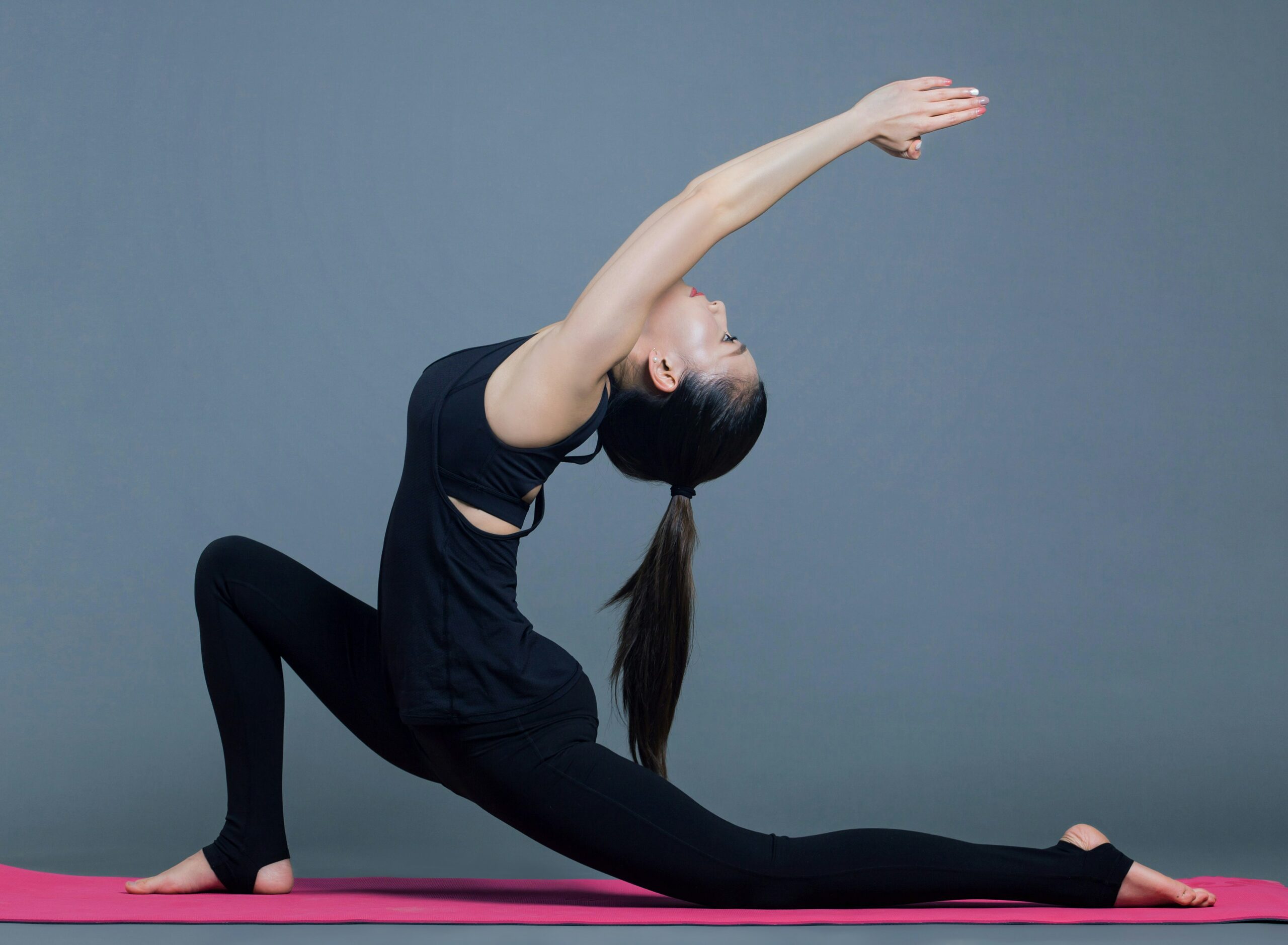
For the hips and legs, consistent stretching plays a major role in how easily you move. This is where yoga leg stretches fit naturally into a daily routine. Poses like low lunges, seated forward folds, and gentle hamstring stretches improve hip and leg flexibility while encouraging controlled breathing and balance.
Calf stretches and hip flexor stretches also support better movement during walking, running, and squatting. Tightness in these areas often shows up as stiffness elsewhere, especially in the lower back.
The goal of daily stretching is not to feel deeply stretched every time. It is to keep joints moving comfortably, and muscles relaxed enough to support your range of motion. When stretching becomes part of your day rather than a separate task, flexibility becomes easier to maintain and more useful in everyday movement.
Using Breathing to Support Flexibility and Range of Motion
I used to think that breathing during stretching didn’t matter much. I focused on how far I could move, not how relaxed my body felt. Once I paid attention to my breath, stretching started to feel more effective and less forced.
Breathing helps your nervous system relax, which allows muscles to release tension more easily. When breathing feels rushed or shallow, the body often resists movement. Slow, controlled breathing signals safety, making it easier to move into stretches without strain.
This is where guided breathing techniques can help. Simple cues like inhaling to prepare and exhaling to gently deepen a stretch improve awareness and control. You do not need long sessions or complicated routines. Even a few slow breaths can change how a stretch feels.
For example, when folding forward, I inhale to lengthen my spine and exhale as I ease into the stretch. That small shift helps me move with less resistance and more comfort. The goal is not to push deeper, but to move more calmly.
Using breath consistently during stretching turns flexibility work into a mindful practice. It supports a better range of motion, reduces unnecessary tension, and helps stretching feel restorative instead of stressful. Over time, this approach makes flexibility easier to maintain and more enjoyable to practice.
Final Takeaway
Improving range of motion and flexibility took more than stretching harder or longer. What worked was learning how movement, consistency, and awareness fit together. Once I stopped treating flexibility as something temporary and focused on how my body moved throughout the day, stiffness became easier to manage.
Range of motion improves when joints move regularly, muscles stay supported, and stretching connects to real movement. Simple habits like dynamic warm-ups, full-body stretches, and guided breathing techniques helped flexibility carry over into everyday life, not just during stretches.
Progress does not happen overnight, and it does not need to. Small, consistent efforts build a movement that feels easier, more controlled, and less forced over time. When flexibility supports how you move instead of existing on its own, your body feels more capable, comfortable, and resilient in both workouts and daily activities.
Frequently Asked Questions (FAQs)
Commonly asked questions on how to improve one’s range of motion and flexibility.